Latest Releases
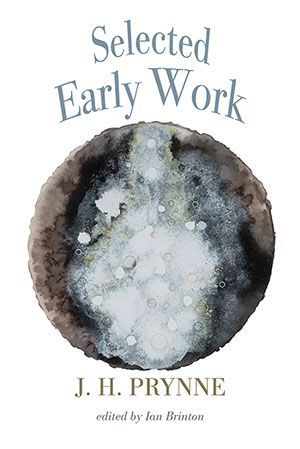
J. H. Prynne Selected Early Work
Published October 2026. Paperback, 160pp, 9 x 6ins, £14.95 / $23
ISBN 9781837380527
J. H. Prynne (1936–2026) was Britain’s leading late Modernist poet. His Poems(1982) collected all the work he wished to keep in print, beginning with Kitchen Poems (1968). An expanded and updated version was published by Bloodaxe Books in 1999 as Poems, with a second, expanded edition in 2005, and a third in 2015; this was later joined by a very substantial volume,
Poems 2016–2024, collecting his subsequent work. A further four slim collections were subsequently published by Face Press. Prynne was a Life Fellow of Gonville and Caius College, Cambridge.
Selected Early Work includes the entirety of the author’s suppressed first collection,
Force of Circumstance (1962), together with some uncollected early poems and some likewise uncollected early prose pieces—letters, reviews, and essays, none of which are scheduled for inclusion in the forthcoming two-volume
Collected Prose from Oxford University Press.
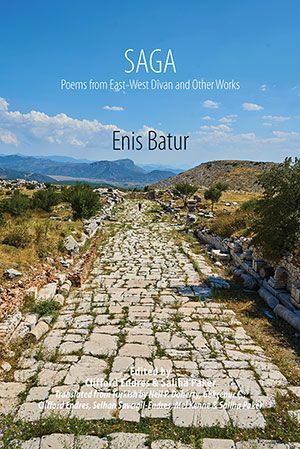
Enis Batur Saga: Poems from East-West Divan, and other works
Edited by Clifford Endres & Saliha Paker. Translated from Turkish by Neil P. Doherty,
Gökçenur Ç., Clifford Endres, Selhan Savcıgil-Endres, Mel Kenne & Saliha Paker
Published October 2026. Paperback, 120pp, 9x 6ins, £12.95 / $20
ISBN 9781837380275
Saga
is a selection of dramatic and lyrical poetry by Enis Batur, who, since the 1980s, has taken a leading position in Turkish literary life as a prolific poet, essayist, and critic. Enis Batur is exceptionally broad in theme, style, and cultural range. His appeal is to all readers of world poetry. The evolution of his work reveals a receptiveness to aesthetic concepts, practices, intellectual features and wide-ranging historical sources that derive from Near Eastern and European traditions, both modern and classical.
His most voluminous book of what he terms “dramatic” poetry bears the title
East-West Dîvan (dîvan
being the classical Ottoman term for collected poetry); consisting of many successive dîvans, each with its own title. It has grown organically over time. Batur’s poetics resist reduction to an “East-West synthesis” or the equally clichéd “East-West divide": their reach, as evidenced by his wide popularity in Europe and his numerous international awards, is universal in nature.
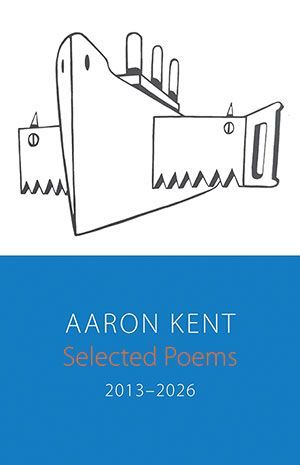
Aaron Kent Selected Poems 2013–2026
Published October 2026. Paperback, 90pp, 8.5 x 5.5ins, £10.95 / $18
ISBN 9781837380534
Aaron Kent’s poems break mid-sentence. One clause starts, another finishes it, and what comes out of the join is usually grief, class, or a joke told at the worst possible moment.
Selected Poems draws on thirteen years of work. The poems move between the tin coast of west Cornwall and a hospital ward at three in the morning, between night terrors and the ordinary things that carry on regardless. Kent writes trees rooted in the throat, a hole in the moon the size of a mechanic, a raccoon watching over a coma, ensuring surrealism has, at its core, a political edge. Throughout, threads of sleeplessness and fatherhood persevere, with his children arriving in these poems as luck, as terror, as the reason to keep count of the small moons of Saturn. He elegises without solemnity and argues politics at conversational volume. There is nobody else in Britain writing like this.
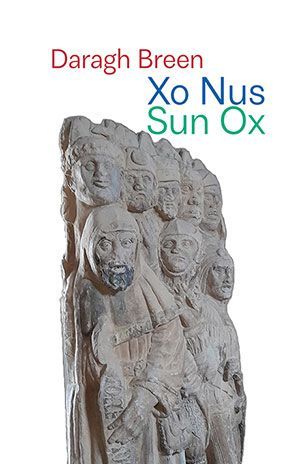
Daragh Breen Xo Nus / Sun Ox
Published October 2026. Paperback, 80pp, 9 x 6 ins, £10.95 / $18
ISBN
9781837380398
In his fourth collection with Shearsman Books, Daragh Breen plays the Pied Piper that leads us on a strange but merry dance through centuries of observations, giving us glimpses of an opera that is operatic in the broadest sense, (no opera-glasses required), rumin-ations on the traumatic Earth-bound life of a sun ox, his thoughts on subjects such as tail growth, both human and rodent, a toad and its umbrellas, and stars that have lost their purchase, while beneath it all lies a watery preoccupation that constantly threatens to break its banks, before closing the collection with a colour-coded Four Seasons sequence.
Kelvin Corcoran (ed.) Shearsman 149 / 150
Published October 2026. Paperback, 100pp, 8.5 x 5.5ins, £10.50 / $17
ISBN 9781837380374
The second double issue of
Shearsman magazine for 2026 features poetry by Rizwan Akhtar, Ben Bruges, David Dobson, Adam Flint, Richard Halperin, Randolph Healy, Tracey Hope, Helena Hunter, Fiona Larkin, Sarah LeFanu, C. Jane Morris, John Muckle, Frances Presley, Sean Reynolds, Paula Sankelo, Aidan Semmens, Barnaby Smith, Janet Sutherland, Jon Thompson, Cliff Yates and Alessio Zanelli, plus translations of Jurgita Jasponytė (by Rimas Uzgiris), Osip Mandelstam (by Alistair Noon), and Luis García Montero (by Anna Crowe).

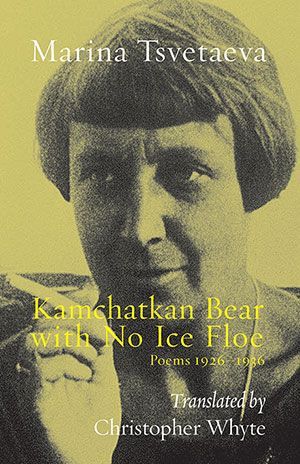
Marina Tsvetaeva Kamchatkan Bear with No Ice Floe: Poems 1926–1936
Translated from Russian by Christopher Whyte
Published September 2026. Paperback, 140pp, 9 x 6ins, £12.95 / $20
ISBN 9781837380404
In the first ten years of her Paris exile Marina Tsvetaeva produced far less poetry than when living in the Czech Lands, or in the tumultuous Moscow years between 1917 and 1922. The poetry was also different in kind. It came in cycles, prompted by the deaths of Vladimir Mayakovsky and Max Voloshin, or by passionate involvements with younger poets of the emigration. Rejecting totalitarianism on both the right and the left, she reached a high point with sequences to the different tables on which she wrote during thirty years, or to a bush (eliciting admiration from both Anna Akhmatova and Lydia Chukovskaya). In ‘Yearning to get back home’, comparing herself to a ‘Kamchatkan bear with no ice floe’, she expresses the full ambivalence of her attitude to the Russian homeland she had abandoned and where she would return, with tragic consequences, in July 1939.
Agnieszka Studzińska Seamless
Published September 2026. Paperback, 86pp, 8.5 x 5.5ins, £10.95 / $18
ISBN 9781837380510
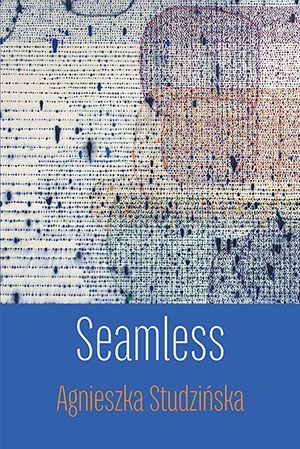
Agnieszka Studzińska’s
Seamless challenges our relationship with language and uncertainty. Language in this collection becomes a ghostly haunt, tracing the journeys and moments in which the narrator encounters language’s difficulties and absence. The collection asks what it means to make meaning in the natural world and in our everyday lives. The poems are set against a lyrical narrative of doubt and hesitation, where private moments open to larger philosophical questions. Even the ghost of Derrida is gently foregrounded in his own questioning of what it means to speak and write.
Karl O'Hanlon Herron's Dream Diary
Published September 2026. Paperback, 90pp, 8.5 x 5.5ins, £12.95 / $18
ISBN 9781837380541
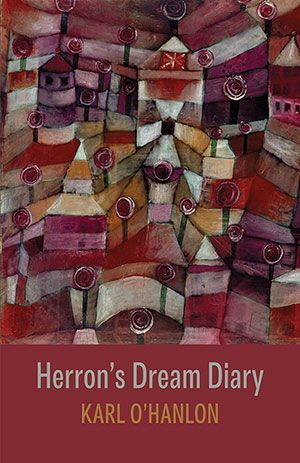
This collection’s fictional protagonist, Herron, is a cadet in the Irish diplomatic service, a young literary Irishman of a type that moved to Paris in the 1930s and got to know the surrealists (Denis Devlin being the model). Herron is a bit Barnaboothian, a bit W.V. Balloon, and a bit the author. The book is an elegy for the Romanian-French poet and existentialist Benjamin Fondane, who was murdered at Auschwitz in 1944. It’s a book about dreams, Surrealism, and low dishonest decades, then and now, exploring bureaucratic sclerosis in the face of atrocity. It attempts to do what Walter Benjamin described as "remembrance": making the concluded (suffering) into something open-ended.
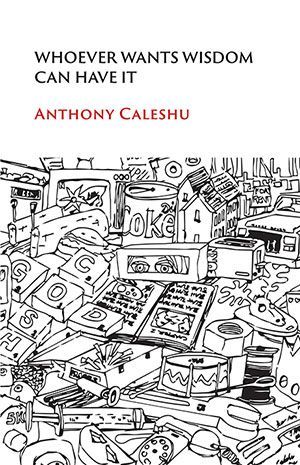
Anthony Caleshu Whoever Wants Wisdom Can Have it
Published September 2026. Paperback, 118pp, 8.5 x 5.5ins, £12.95 / $20
ISBN 9781837380442
“This collection is savagely, sagely, unctuously, unrestrainedly, wisely, Oscar Wilde- and Aesopianly hilarious. There is no let up for the accumulation of insight accrued by humanity, by empires and civilizations past and present. Caleshu is having the time of his life playing the Shakespearian fool who genially welcomes us into the carousel of his mind. I love every page of this dazzling book which is guaranteed to be a mock-Christmas classic, or at least it should be!” —Daljit Nagra
Peter Riley About Poetry
Published August 2026. Paperback, 204pp, 9 x 6 ins, £14.95 / $23
ISBN 9781837380103
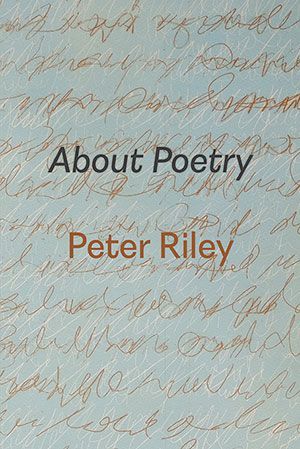
The purpose of About Poetry is to offer a contextual account of the poetry of Peter Riley. Of course, it is a poetry that speaks for itself, but in About Poetry we also have the voice of the poet himself in counterpoint. To understand aspects of the origin of that voice led to the inclusion of two autobiographical essays. The essays and interviews are not only about Peter Riley’s poetry, its transition through five decades, but also the landscape of contemporary poetry. Much of what is said here explores the poetics of that landscape, its achievements, contradictions, creative diversions and its vitality.
David Lloyd Archepelago
Published August 2026. Paperback, 100pp, 8.5 x 5.5ins, £12.95 / $18
ISBN 9781837380213
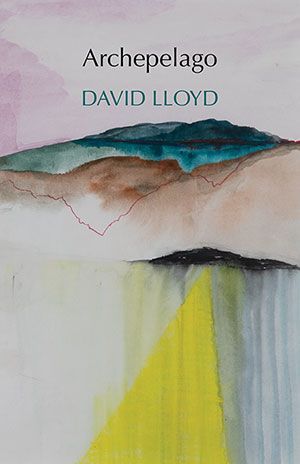
An archipelago is a chain of islands, at once divided and linked by water. The
archepelago is a temporal geography of discontinuity, time’s movement broken by displacement, migration, or histories of colonial erasure, but traversed by momentary constellations in which fragmentary times and scattered things find their conjunctions. In
Archepelago, David Lloyd traverses a terrain that conjoins the Pacific west coast with Ireland’s western isles and the shores of the Mediterranean, terrains haunted by a network of voices cast out from the radiant disaster of our time.
Stefan Hertmans Goya As Dog: Selected Poems
Translated from Flemish by Donald Gardner. English only.
Published August 2026. Paperback, 132pp, 9 x 6ins, £12.95 / $20
ISBN 9781848619777
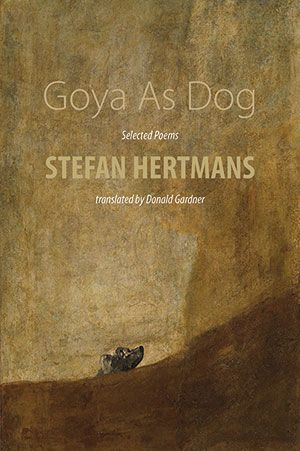
In recent years Stefan Hertmans has acquired an international reputation for his fiction.
War and Turpentine, a memoir of his grandfather’s experiences in the First World War, was one of the
New York Times’s ten best books of 2016, while
The Ascent (De Opgang) sheds an abrasive, troublesome light on the historical tradition in Flanders of collaboration with Fascism. Before he began to write fiction and auto-fiction, however, he already had a very high profile as a poet. Hertmans’ output has been prolific, and it was as a poet that I first made his acquaintance in 2013, when I was asked to translate two of his poems for the annual Lowlands Yearbook. I was struck by the airy lightness of his work: “A child summons you to these hours, / imagine trickling water, / centuries without people. / Be still as ancient stones.” This was a poetry that was both layered and transparent. I saw it as a challenge for a translator and deserving of an international readership.
With its insistent musicality, Hertmans’ poetry lodges itself in the reader’s memory. It also engages in a political and social discussion, which means that, while remaining highly concentrated work, it is anything but hermetic. Its relevance to current world issues, in combination with an almost traditional lyricism, makes him a unique figure in the Flemish scene. Perhaps the notion of ‘metamorphosis’ is a key to his work: each of his poems seems like a living creature, undergoing a transformation from start to finish. (Donald Gardner)
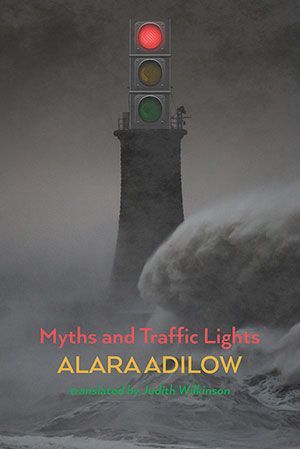
Alara Adilow Myths and Traffic Lights
Translated from Dutch by Judith Wilkison. English only.
Published July 2026. Paperback, 120pp, 9 x 6ins, £12.95 / $20
ISBN 9781837380312
Alara Adilow (b. 1988) is an award-winning Dutch poet of Somali origin, living in Amsterdam. She shot to fame with this debut collection, written during her transition from man to woman. Adilow explores concepts of gender (‘nobody has ever seen a real woman’), she writes about the mismatch between body and consciousness, and brings into focus the harsh realities confronting her on a daily basis: ‘I just want to do my shopping as a woman’ and not ‘as if I’m a post-feminist work of art.’ Blending the raw and the lyrical, this passionate and erudite collection takes the reader on a wild journey, where speaker and surroundings are constantly being redefined.