2027 Titles — in date order
Brian Sneeden Year of the Labyrinth
Published January 2027. Paperback, 82pp, 8.5 x 5.5ins, £10.95 / $18.
ISBN 9781837380596
Anne Carson meets Forrest Gander in this folk-horror pastoral written from inside grief, fatherhood, climate collapse, and myth, where the seams between domestic life and ancient ritual are indistinguishable. A labyrinth planted from a seed opens room by room the tangible rituals of remedy, planting, grafting, foraging, both in language and in landscape.
In his second collection, poet and translator Brian Sneeden translates the labyrinth into lyric, threading the paths of myth and ritual, fatherhood and cloudberries, field notes and bloodroots, ghost stories and river bends. Lithe, unguarded, and slyly luminous, Year of the Labyrinth is a love song to the liminal, where bodies, languages, and histories overlap, and their porousness germinates new forms of wonder.
Fiona Larkin Tenderness of Stone
Published January 2027. Paperback, 88pp, 9 x 6ins, £12.95 / $20
ISBN 9781837380565
"Fiona Larkin’s work explores the mysteries of our fleshly relationship with what is inanimate. These are poems filled with images of mineral strata – limestone and shale – often in association with the rivers and oceans that serve to bathe, to brighten, or to erode them. Larkin’s gaze is a hard one: conscious that all life emerges from just this cocktail of elements. Yet her poems feel out the tension between the chances of our being alive and the profoundly felt significance of being human. For Larkin, our bodies are as concrete: ‘bones the aggregate, flesh the cement, / blood as binding as water’. From such foundations, that Larkin writes such tender poems about the passing of parents, and the raising of children, is a testament to the power of both her language and imagination." — Martyn Crucefix
Peter Robinson Blind Summits
Published January 2027. Paperback, 104pp, 8.5 x 5.5ins, £12.95 / $20
ISBN 9781837380664
Peter Robinson’s new collection,
Blind Summits, takes its title from exclamatory signs on rising roads where the view beyond hill crests may present unexpected challenges to a driver. These poems, from the years around the turn of his eighth decade, negotiate a way through such varied experiences as our emergence from the global pandemic and the return of war to mainland Europe. They reengage with the relation of immediate perception to the world and its underlying structures, encounter in the title sequence interrelations of landscape, art, and the politics of ecosystem survival, and, in the book’s summative section, explore a seaside town guided by a rereading of John Cowper Powys’s Weymouth Sands, its surroundings and associations.
Tammy Lai-Ming Ho Hula Hooping
Published January 2027. Paperback, 112pp, 9 x 6ins, £12.95 / $20
ISBN 9781837380718
Tammy Lai-Ming Ho’s first collection spent fifteen years “between pen and press”. The poems, cross-cultural and personal, paint a broad canvas from love to language, and family to politics.
Hula Hooping is a valuable addition to the growing corpus of Hong Kong poetry in English and was first published in Hong Kong in 2015; this is the second edition.
“Tammy Ho’s first book of poems marks the heart-felt, enigmatic, sassy, unapolo-getically socially engaged voice of an emergent generation that Hong Kong has long waited for.” —Shirley Geok-lin Lim
“These poems are allusive and elusive. Goethe, Chuang Tzu, Nabokov, the wind, text messages, money. Yet there is a tenderness and sometimes stunning direct-ness.” —Lucas Klein
Abdul Wahab al-Bayati A Jeremiad for Hafiz Shirazi & other poems
Translated from Arabic by Ghareeb Iskander with Hassan Abdulrazzak. Bilingual edition
Published January 2027. Paperback, 122pp, 8.5 x 5.5ins, £12.95 / $20
ISBN 9781837380657
Abdul Wahab al-Bayati (b. Baghdad, 1913, d. Damascus, 1999) was one of the Iraqi poets who revolutionised Arabic poetry in the mid-20th century, moving into free verse and away from classical forms. Living in exile for much of his life, or as a diplomat when in favour, he became a kind of ambassador for Arabic literature in the West. Author of over 20 volumes of poetry, only one volume has previously appeared in English, with which this edition does not overlap.

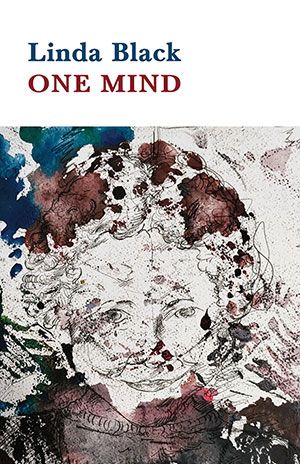
Linda Black One Mind
Published February 2027. Paperback, 96pp, 8.5 x 5.5ins, £12.95 / $20
ISBN 9781837380619
"The title of Linda Black’s new book of poems,
One Mind, sounds as though it might be autobiographical, and there are elements of her childhood and her archive of treasures, but it is primarily about the acts of reading and writing, an
Ars Poetica, which incorporates many minds and valued authors. It contains multitudes of minds. Like all of Black’s writing, it is extremely playful and exploratory. She delights in the pleasure of invention, scattered narratives and the sheer exuberance of language. As she writes ‘Words enfold me, their virtue, their slice / sluice of meaning’. One word unfolds into another in her text, quite naturally and mysteriously. They find each other and are meant to be together, just as one mind unfolds into another: ‘parallel minds / mingling impinging ...’ Black is both poet and artist: her visual and verbal observations and design are always exact, whether drawn to unexpected patterns in a text or recreating a domestic interior. She treats the page as she might a canvas: ‘divide the page into sections, strata, layers of containment. Add texture…’. Sometimes she even tries to observe the mind itself, taking care not to ‘get in the way’ – an impossible task but she allows her mind to wander, and gives the words their freedom, from the vantage point of her own psyche, with all its understanding and love of language." —Frances Presley
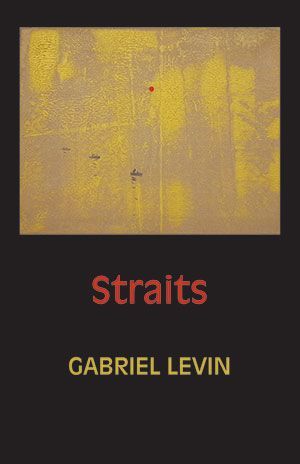
Gabriel Levin Strait
Published February 2027. Paperback, 80pp, 8.5 x 5.5ins, £10.95 / $18
ISBN 9781837380558
Straits was written over several years on the Greek islands of Kea, Lesvos, and, lastly, Crete. Simonides (aka Melicertes) presides over the first movement, 'Beached.' A native of Kea, who allegedly set sail to the Isle of the Blessed, an imagist – “The word is made / in the image of the thing” – avant la lettre, the opening section engages with the poet’s own voice and the fragmentary nature, the papyrus “punctured gaps,” of what has survived of his poetry. The second movement, 'Straits,' is shadowed by Longus’s pastoral novel, Daphnis and Chloe, and introduces its own Grand Guignol traveling theater, while also conjuring up a castaway washed to the shores of Lesvos, a refugee of a distant war across the straits. In the final movement, 'Harbor,' written during my yearlong retreat to Heraklion in 2020–21, ancient site of Knossos, The Dark Labyrinth of the Double Axe, the third ghostly interlocutor appears in the guise of El Greco, who’d apprenticed himself as an icon painter before sailing for Venice. Knocking about the island, I too found – and lost and regained – myself, in seeking out, like the young Cretan painter, the “Vera Icon, the true image impressed / on cloth and coin, or on the living mind/like muted hammer blows”. —Gabriel Levin
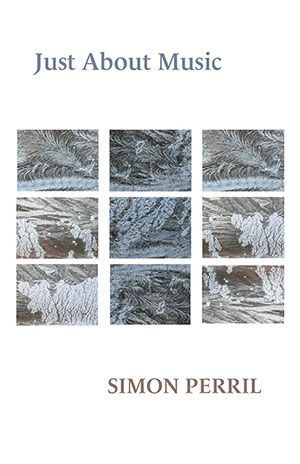
Simon Perril Just About Music
Published February 2027. Paperback, 114pp, 8.5 x 5.5ins, £12.95 / $20
ISBN 978183730466
For this book-length sequence, Perril turns his poetic attention to the emergence of musique concrète, courtesy of Pierre Schaeffer and others, in the late 1940s and 1950s. This was a moment full of excitement, and heresy, that redefined musical activity and opened a path to an electronic music then yet to be trodden. The title Just About Music hums and puns with Schaeffer’s self-scrutiny of being concerned ‘solely’ with music, and yet also barely approximating accepted notions of it; in a new art form where previous understandings of musicianship, instruments, performance, and listening were all in flux. Perril riffs on W.S. Graham’s exemplary sequence ‘Johann Joachim Quantz’s Five Lessons’, concerning the eighteenth-century flautist’s treatise on teaching the transverse flute – a playful ruse allowing the poet to muse on poetry and poetics.
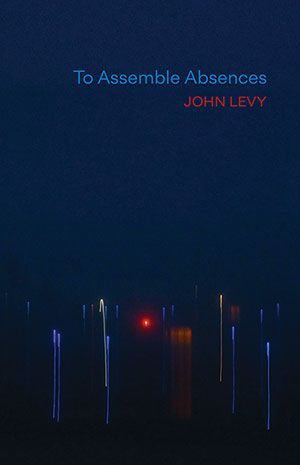
John Levy To Assemble Absences
Published February 2027. Paperback, 80pp, 8.5 x 5.5ins, £10.95 / $18
ISBN 9781837380602
"When we perceive what has been lost to us with enough tenderness, enough true attention, we make it once again present. If this is a tryst with mortality, it is also a tryst with what is impervious to death. And while most of the poems in this collection revolve around John Levy’s warm relationship with his parents, his scope is necessarily inclusive—a long ago goat on a Greek hillside, a cousin, the dead bug fallen into a cup of coffee, a Russian poet, a taxi driver, a dentist. Often, as we grieve, we have to coach ourselves to describe a beloved person in the past tense. In
To Assemble Absences, Levy “embraces with all its/reach/the space/and miracle of breath.” These poems make the invisible once again visible, guiding us back into the present tense." — Elizabeth Robinson
"It’s a lucky joy to stumble across a poet and fall in love with their work. What a gift. John Levy’s poems I found to be so direct and open, honest, precise, generous, funny, kind, and for lack of a better word, natural, that I could not wait to read more, and to tell everyone I knew about them. It felt to me like what I am always searching for, often desperately, in poetry: the language totally unforced, but also casually precise and alive, as if some kind of precious thinking is happening right in front of me. There is a youthful innocence to Levy's poems, the kind of innocence you only truly achieve when you have been around a while, and know that as Rilke said, the way to be a poet is to act like it's the first time not just you, but anyone, has seen anything." —Matthew Zapruder
Álvaro García Evaporation
Translated from Spanish by the author
Published March 2027. Paperback, 136pp, 8.5 x 5.5ins, £12.95 / $20
ISBN 9781837380435
"An extensive poem on the limits of life and creation. An intelligent synthesis between the recreation of the everyday and the dark fissures of reality. It is not easy to maintain, over such long distances, the emotional tension that the poem requires. The Málaga poet has assumed that risk, and has come out of it with high marks." —M. Rico, El País
"A long unitary poem of extraordinary quality. The narrative course is enhanced by certain visionary, irrational outbreaks and a deep lyrical power in its approach to the theme of love." —V. Molina Foix, Tiempo
"There’s something addictive about it. Each verse whets our appetite for another verse, never satiating our hunger. Álvaro’s continuum poeticum lifts us off the ground, carries us to places. To ourselves, to that which is universal and eternal in what we are." —A. S. Zaitegui,
El Cultural

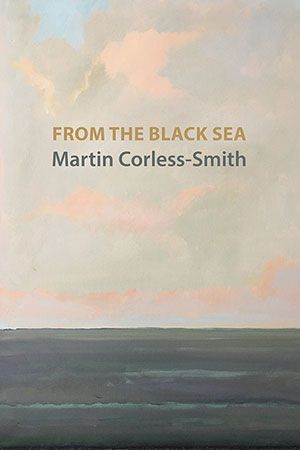
Martin Corless-Smith From the Black Sea
Published March 2027. Paperback, 96pp, 8.5 x 5.5ins, £12.95 / $20
ISBN 9781837380725
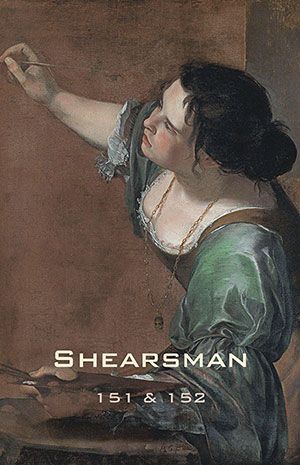
Tony Frazer (ed.) Shearsman 151 / 152
Published April 2027. Paperback, 100pp, 8.5 x 5.5ins, £10.50 / $18
ISBN 9781837380695
The first double issue of
Shearsman magazine for 2027, Contents will be announced in January 2027,
Robin Fulton Macpherson Unfoldings
Published May 2027. Paperback, 112pp, 8.5 x 5.5ins, £12.95 / $20
ISBN 9781837380626
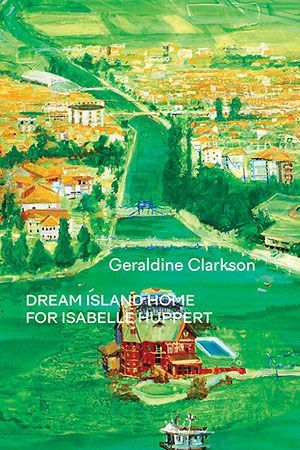
Geraldine Clarkson Dream Island Home for Isabelle Huppert
Published May 2027. Paperback, 218pp, 9 x 6ins, £14.95 / $23
ISBN 9781837380732
Isabelle Huppert, cunning and vulpine, tries out a range of exotic roles as actor and aesthete. An old lady has a factory to supply her with rouge. A headmistress wolf-whistles builders. Abducted girls call out from cupboards and crevices, and Pre-Raphaelite models complain. The spirit of Isabelle's ideal home hangs in the air, drawing on histories and geographies both mythical and subversive; and 'many rooms'-waiting rooms, fainting rooms, kitchens, sick rooms, parlours, television studios, convent cells- honeycomb the book. There is fasting, feasting and fornication; the lamenting and celebrating of homes real, imaginary and ideal. The animal kingdom is ever-present, howling in doorways and undergrowth, belying a polite exterior. A heavenly dog presides. Flowers and demons abound.
In Dream Island Home for Isabelle Huppert Geraldine Clarkson has pulled out all the stops, allowing her imagination to run unfettered and giddy across the glowing lawns and softly carpeted spaces of her poetic home from home. This astonishing 'super-collection' speaks of abandon but also of discretion and timidity, and a deft editorial hand. Poems call to each other across the pages, reprising themselves and their characters, opening doors and windows before slamming them shut.
Peter Hughes Collected Poems
Published May 2027. Paperback, 400pp, 9 x 6ins, £19.95 / $30
ISBN 9781837380688
Nathaniel Tarn The Lake Inside the Sun
Edited by Peter O'Leary
Published May 2027. Paperback, 264pp, 9 x 6ins, £17.95 / $28
ISBN 9781837380671
The Lake Inside the Sun is Nathaniel Tarn's final poetry manuscript, finlaly brought to a close a few short months before his death in 2024. Something of a summing-up of his life, the book concentrates on two major aspects of Tarn's "other life", as an anthropologist — something which always leaked into his poetry but which here takes the foreground. Partly concentrating on the Highland Maya of Central America, and partly on East Asian Buddhism, the poems take us into a fascinating series of realms that do not usually find representation in contemporary poetry. The manuscript has been edited for publication by the author's literary executor, Peter O'Leary.
Kelvin Corcoran (ed.) Shearsman 153 / 154
Published October 2027. Paperback, 100pp, 8.5 x 5.5ins, £10.50 / $18
ISBN 9781837380817
The second double issue of
Shearsman magazine for 2027, Contents will be announced in July 2027,

Vicente Huidobro Altazor
Translated from Spanish by Tony Frazer
Published 2027, date tbc. Paperback, 208pp, 9 x 6ins, £14.95 / $24
ISBN 9781848618640
Altazor is increasingly seen as one of the key works of the 20th-century Hispanic avant-garde in poetry. Apparently put together over several years, it looks back in part to the ground-breaking volume Ecuatorial (1918), imbibes a number of futurist tropes from that same era, takes in the surrealist wave that took hold in the mid-1920s, and ends with shattered pieces of language that appear to admit of the impossibility of finishing the work coherently, or even of coherent speech, while also implying a more pessimistic view of the world than that which Huidobro would have espoused as a younger man during the heyday of Cubist Paris. In amongst all this, the poem’s eponymous protagonist flies high and low, taking in the heavens and the depths of hell, following both Dedalus and Orpheus. While the book evidently left his contemporaries puzzled, and had minimal initial impact, Altazor today looks uncannily prophetic, even post-modern, in its emphasis on verbal games and trickery, on defamiliarisation, and being comfortable with a lack of any conclusion. Huidobro even boasted of this lack in a letter to Luis Buñuel, referencing Lautréamont and Rimbaud as other “failures” who sought no closure, and whose company he was glad to keep.

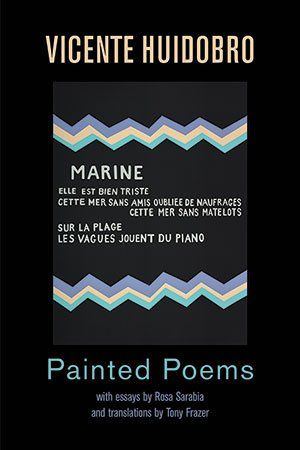
Vicente Huidobro Painted Poems
Poem texts translated from French by Tony Frazer. With an essay by Rosa Sarabia and a dozen full-colour images.
Published 2027. Date tbc. Paperback, ca. 96pp, 9 x 6ins, £12.95 / $20
ISBN 9781848618206
In 1922, in Paris, Vicente Huidobro exhibited a dozen painted poems: poster-sized, these exotic creations were an attempt by the poet — who was close to a number of the leading painters of the time — to take the Cubist leanings in his verse to their logical extreme. Here Apollinairean
calligrammes — and Apollinaire was one of Huidobro's first friends in Paris — move from being pictorial poems to being pictures in their own right. The volume includes all the recreated versions made for the 2001
Salle XIV exhibition at Madrid's Reina Sofía Museum, along with with as many reproductions of the originals, and their drafts, that we have been able to assemble.
Benedikt Livshits The One and a Half Eyed Archer
First UK edition. Translated from Russian by John E. Bowlt.
Published 2027; exact date tbc. Paperback, 284pp, 9 x 6ins, £16.95 / $25
ISBN 9781848619623
This is a memoir, first published in 1933, of the author's Futurist years in pre-WW1 Russia and Ukraine. While there were other memoirs by the participants in the frenetic avant-garde of those years, most are short and give little real impression of the scene. Livshits (1887–1938), a poet of Ukrainian Jewish origin, was invited to join the young
Hylaea [Гилея] grouping, later styled "Cubo-futurist", by its self-appointed leader, David Burliuk (1882–1967); other members were David's brothers, and the experimental poets Vladimir Mayakovsky (1893–1930), Velimir Khlebnikov (1885–1922), Aleksei Kruchyonykh (1886–1968), and poet-playwright-artist, Vasily Kamensky (1884–1961). The latter was born in Perm, Mayakovsky in Georgia, and Khlebnikov in Astrakhan, whereas the others were all born in Ukraine. In those days of the Russian Empire, all the participants in the movement spoke Russian as a first language, wrote in it and – in the case of Livshits – translated into it. The group collaborated closely with the major artists and composers of the era – Malevich, Exter, Rozanova, Matyushin, Lourié to name just a few – published wild manifestos, artist's books, gave readings that were more like late-20th-century happenings, and generally shook the intellectual world up. The movement burned brightly, but only for a short time, and was destroyed by war, civil war, revolution and exile. Livshits himself was to fall afoul of Stalin's purges in the 1930s, but he left us this remarkable memoir, without which the era would be much hazier. This translation first appeared almost 50 years ago in the USA, and was reissued in a fully-illustrated edition St Petersburg some 20 years ago, but is finally available in the UK and the US again in this new edition.